Hot Tub Demolition in Seattle
Some hot tubs need to be taken apart before they can move through a gate or off a built-in platform. The demolition plan starts with utility status, construction, access, and the materials that will remain after dismantling.
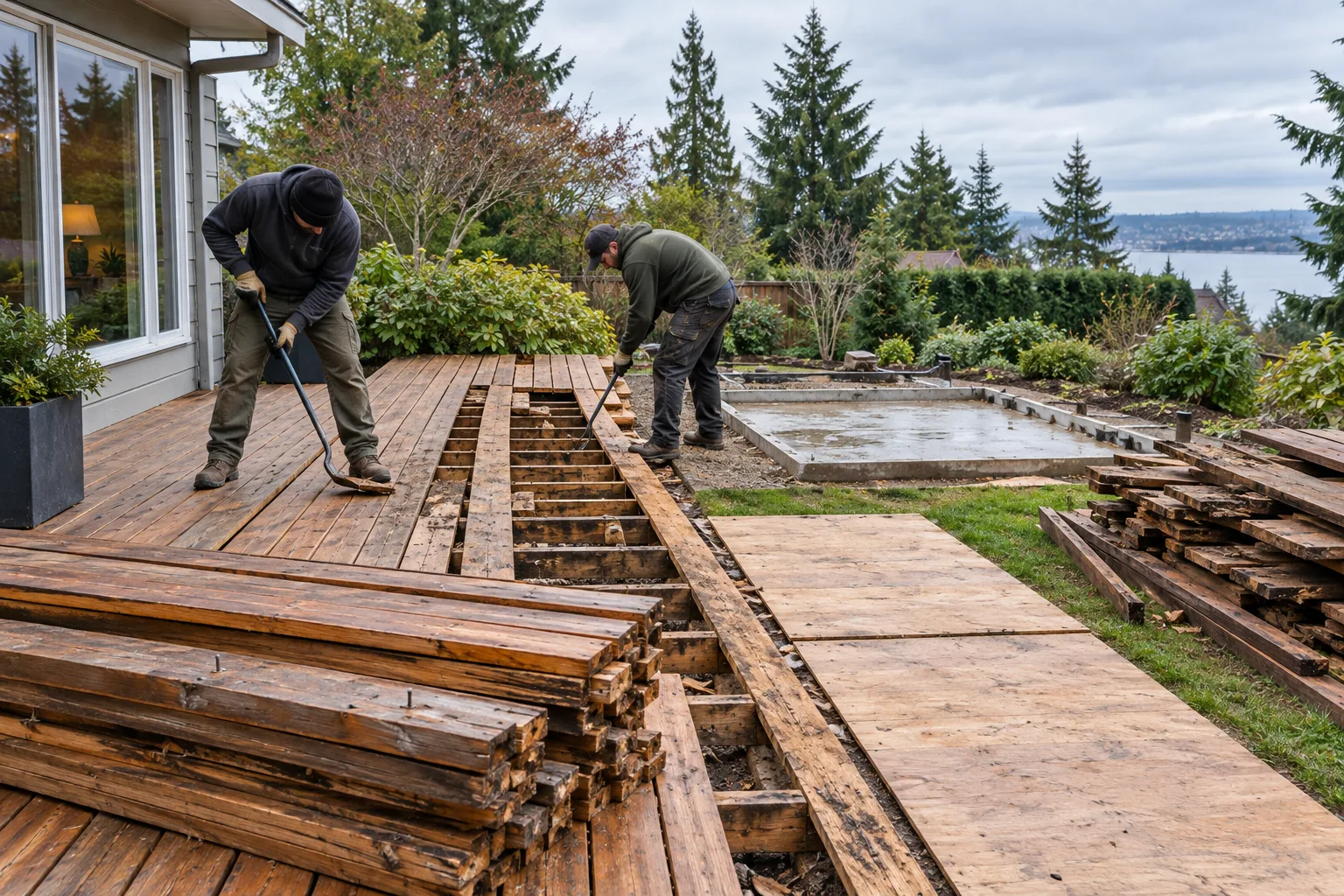
What this scope can cover
- Controlled hot tub disassembly
- Cabinet, shell, and ordinary internal components
- Sorted loading of approved material
- A final sweep of the agreed work area
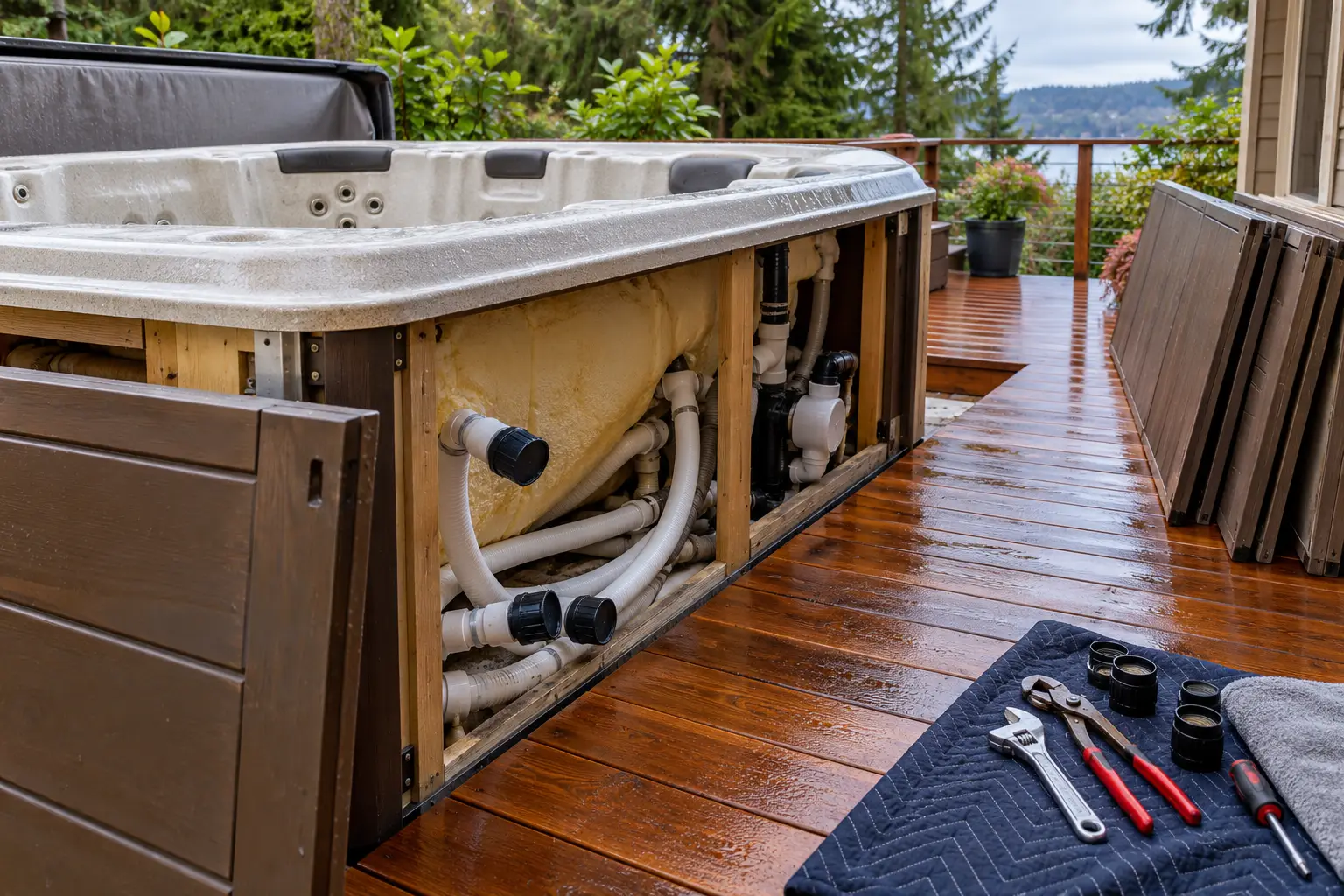
Prepare the site without creating a second project.
Share the current condition and leave heavy or unstable pieces in place. The goal is a useful assessment, not unpaid demolition before the estimate.
- 1Drain the hot tub fully.
- 2Have power and gas connections made safe by the appropriate qualified trade.
- 3Photograph the shell, cabinet, equipment bay, and surrounding structure.
- 4Measure every gate, stair, landing, and turn on the removal route.
What shapes the estimate
Photos help with early planning. The final scope depends on the actual materials, access, and work agreed at the property.
- Tub dimensions and construction
- Shell and cabinet condition
- Freestanding or built-in placement
- Access and carrying distance
- Material separation requirements
Hot Tub Demolition questions
See all FAQsWhen is demolition needed?
Demolition may be used when the tub is too large for the route, fixed into a structure, or unsafe to move as one unit.
Who disconnects the power?
Electrical and gas connections should be made safe by the appropriate qualified trade before demolition begins.
Are the pieces removed afterward?
Approved demolition material can be included when loading and disposal are part of the written scope.
Define the scope before the crew arrives.
Use the estimate checklist to capture the item, access, utilities, and finish line.